
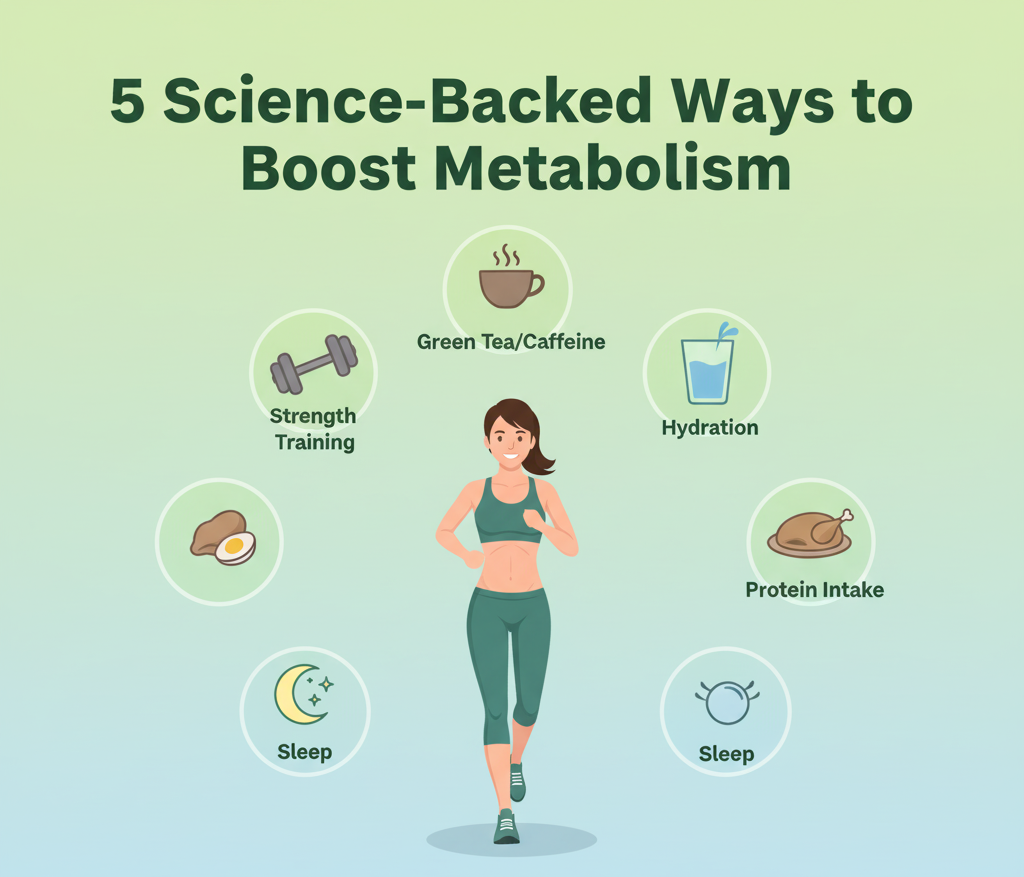
5 Science-Backed Ways to Boost Your Metabolism Naturally
If you have ever tried to lose weight or simply wanted more energy throughout the day, you have probably come across the word metabolism. In simple terms, metabolism is the process by which your body converts what you eat and drink into energy. It is happening 24/7, even while you are sleeping. A faster metabolism means your body burns more calories, making it easier to manage your weight, feel active, and stay healthy. The problem is that many people believe metabolism is something you are born with and cannot change. While genetics do play a role, research clearly shows that there are several natural ways to give your metabolism a noticeable boost. By making a few smart lifestyle choices, you can encourage your body to burn calories more efficiently, which not only supports weight management but also improves overall health. In this article, we will break down five proven, science-backed strategies to increase your metabolism naturally. These are not gimmicks or quick fixes. Instead, they are practical changes you can start applying today to see long-term results. >>>Simple “Drip & Drop” Ritual Burns Belly Fat 3X Faster 1. Strength Training: Building Muscle to Burn More Calories When it comes to boosting metabolism, strength training is one of the most effective methods. The reason is simple: muscle burns more calories than fat, even when you are at rest. Research has shown that every pound of muscle you gain increases your resting metabolic rate, meaning your body becomes more efficient at burning calories throughout the day. Cardio workouts like running and cycling are excellent for burning calories while you exercise, but once you stop, the calorie burn slows down. Strength training, on the other hand, creates a lasting effect. By increasing muscle mass, you raise your daily energy expenditure, even while sitting on the couch or sleeping at night. The science behind it is well established. A study published in the Journal of Applied Physiology found that individuals who engaged in resistance training experienced a significant rise in resting metabolic rate compared to those who did only cardio. If you are new to strength training, you do not need fancy equipment. Bodyweight exercises like push-ups, squats, and planks are enough to start with. As you progress, adding dumbbells or resistance bands can accelerate your results. Aim for at least three strength training sessions per week. 2. Staying Hydrated: Why Water is More Powerful Than You Think It is easy to underestimate the role of water in your metabolism. After all, it seems too simple. Yet multiple studies confirm that proper hydration plays a key role in energy expenditure. Drinking water has been shown to increase metabolism by 24 to 30 percent for about an hour. This effect, called water-induced thermogenesis, means your body burns more calories as it works to warm the water to body temperature. Cold water seems to provide an even stronger boost. In fact, researchers found that drinking half a liter of cold water increased calorie burning by around 25 calories. While this might not sound like much, think about how many glasses of water you drink in a day. Over time, these small increases add up significantly. Beyond boosting metabolism, hydration improves digestion, supports nutrient absorption, and keeps you energized. Dehydration, on the other hand, can make you feel sluggish and slow down calorie burning. A practical tip: start your day with a large glass of water before breakfast, and keep a reusable bottle with you to sip throughout the day. For an extra boost, add a slice of lemon or cucumber to your water for flavor and additional health benefits. 3. Protein-Rich Diet: Turning Food Into a Metabolic Advantage You have probably heard that protein is important for building muscle, but its impact on metabolism is often overlooked. Eating protein increases your metabolic rate through something known as the Thermic Effect of Food (TEF). Simply put, your body uses energy to digest, absorb, and process the nutrients in food. Protein has the highest thermic effect compared to carbohydrates and fats, meaning your body works harder and burns more calories to break it down. According to research, eating protein can temporarily raise metabolism by 15 to 30 percent, while carbs raise it by 5 to 10 percent and fats by only 0 to 3 percent. In addition, protein-rich meals keep you full for longer, reduce cravings, and prevent overeating. Practical sources of protein include eggs, Greek yogurt, legumes, lentils, tofu, cottage cheese, nuts, and seeds. If you follow a vegetarian or vegan diet, beans, lentils, quinoa, and soy products can easily provide the protein your body needs. For best results, aim to include a source of protein in every meal. For example, start your morning with scrambled eggs or overnight oats with chia seeds, have lentil soup or a chickpea salad for lunch, and enjoy grilled paneer or tofu for dinner. >>>Simple “Drip & Drop” Ritual Burns Belly Fat 3X Faster 4. Green Tea and Coffee: Nature’s Metabolism Boosters If you are already a coffee or tea lover, you will be happy to know that your daily cup could be helping your metabolism. Both beverages are rich in compounds that support fat burning and calorie expenditure. Coffee contains caffeine, a natural stimulant that increases calorie burning by activating the nervous system. It has been shown to improve physical performance, enhance focus, and raise metabolic rate by 3 to 11 percent. Green tea, on the other hand, is packed with antioxidants called catechins, particularly epigallocatechin gallate (EGCG). Studies reveal that green tea extract can increase fat oxidation and enhance calorie burning, especially when combined with moderate exercise. A review published in the American Journal of Clinical Nutrition found that green tea can increase daily energy expenditure by about 100 calories. This might not sound dramatic, but over weeks and months, the cumulative effect is noticeable. The key is moderation. Too much caffeine can cause jitters, anxiety, or disrupt your sleep, which in turn can harm your metabolism. One